Rain is one of the most common worries couples have when planning a wedding in the UK.
After months of organising a venue, outfits, flowers, timings and photographs, it is understandable to imagine a perfect dry day and feel disappointed by the thought of grey skies or heavy showers.
The reality is much less dramatic.
Rain does not automatically spoil a wedding, and it certainly does not mean your wedding photography will be ruined. It may change how some parts of the day unfold, but an experienced photographer can adapt to changing conditions and continue documenting the celebration naturally.
In many cases, wet weather simply becomes part of the story.
Guests gather closer together, umbrellas appear, plans change and unexpected moments happen. The photographs may look different from the sunny version you had imagined, but different does not necessarily mean worse.
The most useful approach is to prepare sensibly, remain flexible and choose a photographer who is comfortable working in unpredictable British weather.
Does rain ruin wedding photography?
No.
Rain changes the conditions a photographer works with, but it does not remove the opportunities for meaningful photographs.
Wedding photography is primarily about people, relationships, expressions and moments. Those things still happen when it rains.
You will still get ready with the people closest to you. You will still walk into the ceremony, exchange vows, greet your guests, listen to speeches and celebrate afterwards.
In fact, some of the strongest photographs from a wedding can happen because plans did not unfold exactly as expected.
Guests running between buildings, someone helping with an umbrella or a couple laughing because they have been caught in a shower can all create natural moments that would never have existed on a perfectly dry day.
A documentary approach to wedding photography is particularly well suited to this kind of unpredictability because the aim is not to force the wedding into a predetermined set of pictures.
The photographer responds to what actually happens.
What changes when it rains on a wedding day?
That depends on the venue, the severity of the weather and how much of the wedding was originally planned outdoors.
A short shower may make very little difference.
Heavy rain throughout the day could move some activities indoors or change the timing of portraits and group photographs.
Possible changes include:
- moving an outdoor ceremony inside
- holding the drinks reception indoors
- adjusting the timing of group photographs
- using covered areas for portraits
- waiting for a brief break in the rain
- changing where confetti is thrown
- using indoor spaces that were not originally part of the photography plan
None of these changes needs to become a crisis.
Wedding days rarely run with absolute precision anyway. Timings move, guests arrive late and plans evolve.
Weather is simply another variable.
How can couples prepare for rain before the wedding?
You cannot control the forecast, but you can make rainy weather easier to deal with.
The first step is understanding the wet-weather options at your venue.
Ask what happens if an outdoor ceremony cannot go ahead. Find out which indoor spaces are available for drinks, group photographs and other parts of the day.
It is also useful to understand how guests will move between buildings.
A venue with several separate spaces may work beautifully in dry weather, but you may want umbrellas or covered routes if guests need to cross an open courtyard during heavy rain.
Preparing for the possibility of rain does not mean expecting the worst.
It simply means you will not have to make every decision under pressure on the wedding morning.
Should you buy umbrellas for your wedding?
Umbrellas can be useful, particularly at rural venues where guests may need to walk between different parts of the property.
They can also allow couples to spend a little time outside even when light rain continues.
You do not necessarily need to buy dozens of matching umbrellas purely for photographs.
The priority is practicality.
If your venue already provides umbrellas, ask about them. Otherwise, having a handful available for the couple and wedding party can be helpful.
Neutral or transparent umbrellas can work well photographically because they do not dominate the scene, but there is no rule saying everything has to match.
If brightly coloured umbrellas naturally suit your wedding, they can become part of the visual story.
Can you still have outdoor wedding photographs in the rain?
Often, yes.
It depends on how heavy the rain is and whether you are comfortable going outside.
A light shower may be perfectly manageable with an umbrella. Even during a wetter day, there are often quieter periods when you can step outside for a few minutes.
You do not necessarily need an hour-long outdoor photoshoot.
A brief walk around the venue can provide enough time for relaxed couple photographs before you return to your guests.
Covered outdoor areas can also be useful.
Doorways, archways, barns, verandas and trees may provide some shelter while allowing the surroundings to remain visible in the photographs.
An experienced photographer will look for possibilities rather than treating rain as the end of outdoor photography.
Do you have to go outside if it is raining?
No.
You should not feel pressured into standing outside in uncomfortable weather simply because photographs were originally planned there.
Your wedding day should still feel enjoyable.
If you are happy to head outside with an umbrella for five minutes, that can create some memorable photographs.
If you would rather stay warm and dry, that is equally valid.
A photographer should be able to adapt rather than making the wedding revolve around a particular image.
Indoor spaces, window light, covered areas and the natural activity of the celebration can all provide photographic opportunities.
The aim is to document the wedding you are actually having, not insist on recreating a sunny-weather plan regardless of the conditions.
Can rain make wedding photographs more interesting?
It can.
Rain changes light, reflections, colours and atmosphere.
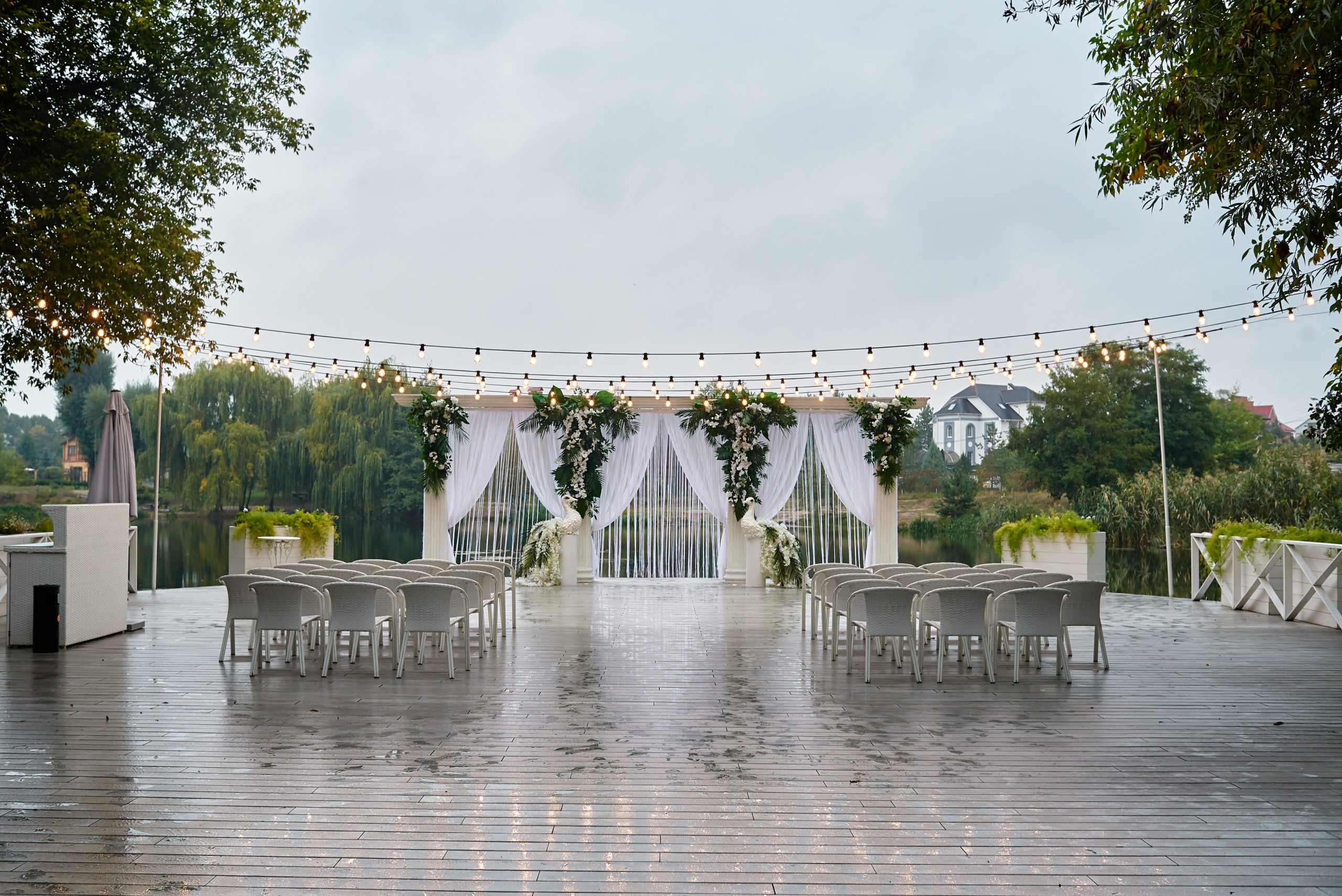
Overcast weather often produces softer outdoor light than strong midday sunshine. Wet surfaces can create reflections, while umbrellas and changing skies can add visual interest.
Later in the day, rain can also become particularly atmospheric around lights.
None of this means couples should hope for bad weather.
It simply means that rain is not photographically useless.
A photographer who understands changing light and conditions can often find creative possibilities within weather that initially looks disappointing.
The strongest images may still be the candid ones, though.
A guest laughing while sheltering under a coat or a couple dashing back inside can tell you much more about the day than a carefully staged rain photograph.
What if the ceremony is supposed to be outside?
If you are planning an outdoor ceremony, ask your venue about the backup plan well before the wedding.
You should know:
- where the ceremony will move if necessary
- when the decision needs to be made
- who makes that decision
- whether the indoor setup changes the guest arrangement
- whether photography restrictions differ indoors
This information can help you feel much calmer if the forecast begins to look uncertain.
It also gives your photographer time to understand both possibilities.
An indoor ceremony is not a lesser version of the wedding.
The setting changes, but the important moments remain the same.
Your photographer will still be looking for the entrance, reactions, vows, laughter and the interactions happening around you.
What happens to group photographs if it rains?
Group photographs may need a little more planning, but they can usually still be done.
If there is a suitable indoor space, family groups can be photographed there.
Alternatively, a covered entrance or sheltered area may work.
If the weather improves later, you may decide to postpone some group photographs until a dry spell.
This is another reason to keep the formal group list manageable.
Trying to arrange twenty or thirty combinations during bad weather can take a considerable amount of time.
A shorter list of genuinely important family photographs is easier to organise efficiently, whether indoors or outside.
Your photographer can then return to capturing the rest of the day naturally.
How can a rural venue affect rainy-day plans?
Rural Hampshire wedding venues can offer beautiful surroundings, but countryside locations sometimes require a little extra wet-weather planning.
Fields, gravel paths, lawns and woodland can all become muddy after sustained rain.
That does not mean you should avoid using them completely.
It simply means thinking practically about footwear, access and how much time you want to spend outside.
Some venues also have separate barns, accommodation buildings or ceremony spaces, making umbrellas particularly useful when moving between locations.
Before the wedding, find out which areas remain accessible in poor weather.
A covered barn entrance, courtyard or sheltered garden area may become more valuable than the distant viewpoint you originally imagined using for portraits.
Photographers who regularly work across different wedding venues are accustomed to adapting to these changes.
What should you do about your wedding outfit?
If you want to go outside for photographs in wet conditions, there are practical ways to make it easier.
For dresses with longer hems, you may be able to lift the fabric while walking and let it down once you reach the photography location.
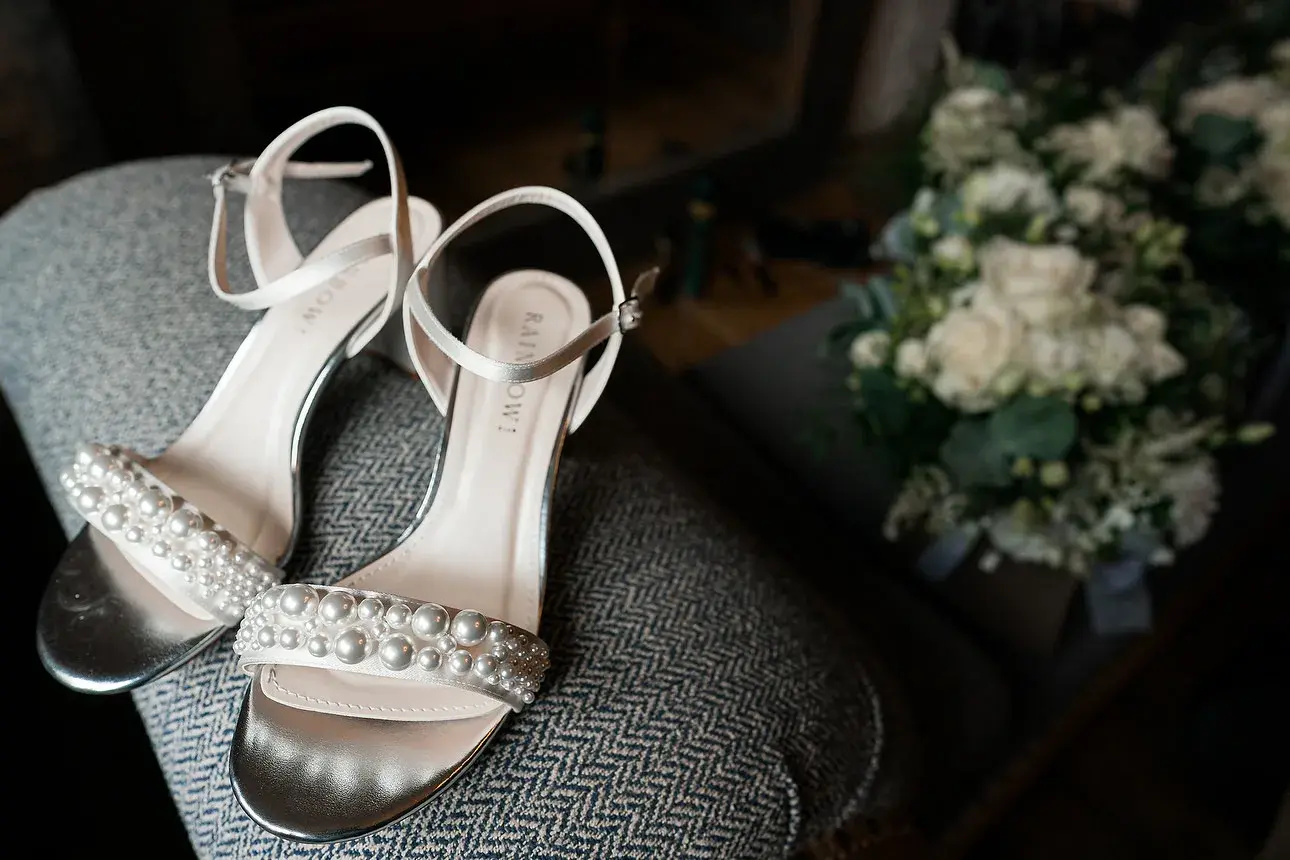
Bringing alternative footwear can also help if the ground becomes muddy.
You might wear boots or practical shoes while moving across wet ground, then change when appropriate.
The same applies to other members of the wedding party.
It is usually better to make sensible adjustments than spend the entire day worrying about keeping everything untouched.
Wedding clothes are being worn for a wedding, after all.
A little evidence that you actually celebrated in them is not necessarily a disaster.
What if the forecast looks bad all week?
Try not to spend the entire week repeatedly refreshing weather apps.
Forecasts can change, particularly when you are looking several days ahead.
Even a forecast showing rain does not always mean continuous rain from morning until night.
There may be dry periods or lighter showers that allow outdoor plans to continue.
Your venue and photographer will be much better placed to make practical decisions once the conditions are clearer.
Have a backup plan, but avoid mentally replacing your entire wedding with the worst possible scenario.
If the weather does turn out to be wet, you will already know what the alternatives are.
How can couples stay relaxed when the weather changes?
One of the most useful things you can do is accept that some parts of a wedding cannot be controlled.
Weather is one of them.
You can spend months creating detailed plans, but nobody can guarantee sunshine.
What you can control is how much importance you give the weather once the day begins.
Your guests are attending because they want to celebrate with you. They are unlikely to spend the day thinking that the wedding has been ruined because everyone had to drink indoors instead of on the lawn.
If you are enjoying yourselves, the atmosphere generally follows.
That also affects the photographs.
Genuine laughter in the rain will usually create a stronger memory than visible frustration because the sky did not cooperate with the original plan.
Should you change the wedding schedule because of rain?
Sometimes a small change can be useful.
If there appears to be a short dry period later in the afternoon, for example, your photographer might suggest postponing couple portraits until then.
Likewise, group photographs could move slightly if conditions are expected to improve.
However, the photography should not take over the entire schedule.
If you spend the drinks reception continually watching the weather and waiting for a perfect ten-minute window, you risk missing the actual celebration.
A flexible approach works better.
Take opportunities when they appear, but allow the day to continue naturally.
What should you ask your photographer about bad weather?
Before booking, it is worth asking how comfortable the photographer is working in different conditions.
Useful questions include:
- How do you approach wedding photography in the rain?
- What happens if outdoor portraits are not possible?
- Are you comfortable photographing indoors in difficult light?
- Can portrait timings change if the weather improves later?
- How do you handle wet-weather group photographs?
The answers should give you a sense of whether they see changing conditions as a normal part of wedding photography or a major obstacle.
You can also look through the photographer’s portfolio for examples of different seasons, lighting situations and wedding environments.
Consistency across varied conditions can be more reassuring than a portfolio containing only perfect summer sunshine.
Why can a documentary approach work well in bad weather?
Documentary photography does not depend on recreating a fixed list of idealised wedding photographs.
Its strength comes from observing what is genuinely happening.
If rain forces guests inside, the photographer follows the story inside.
If everyone gathers under umbrellas outside the ceremony, that becomes part of the story.
If a brief dry spell appears and you decide to take a walk, that can be documented too.
This flexibility means the photographs can remain authentic even when the wedding does not unfold exactly as originally planned.
The weather becomes context rather than the main subject.
Years later, you may remember the rain fondly because of the moments that happened around it.
Frequently Asked Questions
Is rain on your wedding day bad for photographs?
No. Rain changes the conditions, but experienced photographers can adapt using indoor spaces, shelter, changing light and short breaks in the weather.
Should we postpone outdoor wedding photographs if it rains?
Possibly, if the forecast suggests a dry period later. However, light rain may still allow you to take photographs outside if you are comfortable doing so.
Can wedding photographers work indoors all day?
Yes. Indoor photography may require a different approach to light and positioning, but a professional wedding photographer should be comfortable adapting to the venue.
What footwear is best for a rainy wedding?
If you plan to cross lawns, fields or muddy areas, having practical alternative footwear can be helpful. You can change back into your main wedding shoes once indoors.
Should we have a wet-weather wedding plan?
Yes. Knowing where ceremonies, drinks receptions and photographs can move in bad weather removes uncertainty and makes last-minute changes much easier.
Will grey skies make our photographs look dull?
Not necessarily. Overcast conditions can produce soft, flattering light, and an experienced photographer can work with the available environment to create natural images.
Rain does not change what the wedding is about
It is completely reasonable to hope for good weather on your wedding day.
But sunshine is not what makes a wedding meaningful.
The people, conversations, reactions and moments you share are what create the memories.
Rain might alter where part of the reception happens or mean you use an umbrella for your portraits. It might even result in a few muddy shoes.
What it does not have to do is prevent you from enjoying the day or receiving a photographic record that feels genuine.
Good wedding photography adapts.
Rather than trying to pretend the rain was not there, it can incorporate the weather naturally while continuing to focus on the relationships and moments that matter.
If you are planning a wedding in Hampshire or elsewhere in the South of England, you can learn more about Lemontree Photography’s wedding photography, browse the portfolio, or get in touch to discuss your plans.
Phone: 07847 046360
Email: az@lemontree-photography.co.uk
Find out more: https://www.lemontree-photography.co.uk/