Wedding photography is not simply about creating a collection of attractive portraits. At its best, it records how the day actually felt.
The nervous excitement of getting ready, a parent’s expression just before the ceremony, friends laughing during the drinks reception and the chaos of the dance floor can all become part of the story. Individually, these photographs capture moments. Viewed together, they create a much richer record of the wedding.
That is where a documentary approach to wedding photography can be particularly powerful. Rather than concentrating only on the obvious highlights, the photographer pays attention to everything happening around them. The result can show not only what the wedding looked like, but also the personalities, relationships and atmosphere that made it unique.
A complete wedding story is therefore built from much more than the ceremony and couple portraits. It begins long before the vows and often continues well into the evening.
What does storytelling mean in wedding photography?
Storytelling in wedding photography means creating a collection of photographs that makes sense as a complete record of the day.
If somebody who had not attended the wedding looked through the gallery, they should be able to understand how the celebration unfolded.
They might see the calm of the venue before guests arrive, followed by preparations becoming increasingly busy. The ceremony brings a change of pace and emotion. Afterwards, the photographs become more social as people talk, laugh, eat and celebrate. By the evening, formalities begin to disappear and the atmosphere changes again.
The strongest wedding stories contain this sense of progression.
That does not mean every photograph needs to be dramatic or emotionally significant. Quieter images provide context too.
A photograph of an empty ceremony room before anybody arrives might sit alongside an image of the same space filled with guests. A picture of carefully prepared tables may later be followed by photographs of friends sitting around them laughing during dinner.
These contrasts help create a sense of time passing.
Why should the story begin with the preparations?
Wedding preparations can reveal a great deal about the people involved.
At first glance, the morning might appear to be mainly about clothes, hair, make-up and getting ready. In reality, there can be an enormous amount happening.
Friends arrive. Parents become emotional. Someone discovers something has been forgotten. Music starts playing. Drinks are poured. Children wander in and out. The room gradually becomes busier as the ceremony approaches.
These interactions often create photographs that would be impossible to recreate later.
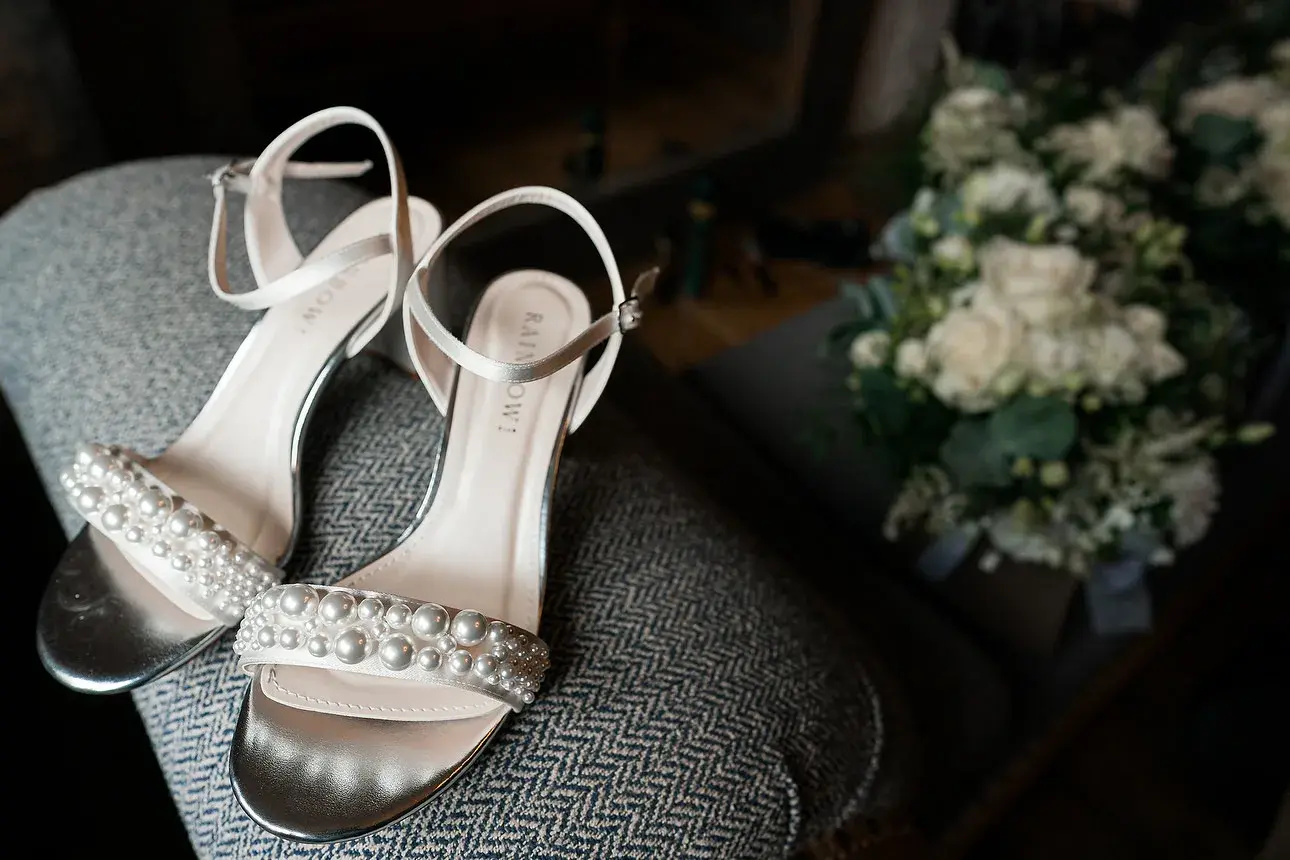
There are also important details that naturally belong to this part of the story. Outfits, flowers, handwritten notes and other personal touches may all help establish the setting.
However, documentary photography does not need to turn preparations into a carefully staged photoshoot.
Often the most revealing photographs happen when people are focused on each other rather than the camera.
Capturing these moments creates a natural beginning to the wedding story and shows some of the anticipation that guests arriving later in the day may never see.
How does the ceremony become part of the story?
The ceremony is one of the most important chapters of the day, but storytelling involves more than photographing the couple exchanging vows.
There are usually several stories unfolding simultaneously.
One person may be watching their partner arrive while parents and friends react nearby. A child might become distracted halfway through the ceremony. Guests may laugh at something unexpected or quietly wipe away tears.
These reactions add depth because they show how the moment affected the people who were there.
A documentary photographer therefore needs to pay attention beyond the couple themselves.
Wide photographs can establish the setting. Closer images can show expressions and gestures. Photographs of guests provide another perspective on the ceremony.
Together, these different viewpoints help the final gallery feel more immersive.
Why are candid moments so important?
Some of the most memorable wedding photographs are moments nobody planned.
A close friend may say something that makes the couple laugh immediately after the ceremony. Grandparents might share a quiet conversation during the drinks reception. Children could turn an immaculate lawn into an impromptu playground.
None of these moments will appear on the official wedding schedule.
That is exactly why they matter.
Candid photography records the parts of the wedding that occur naturally between the planned events.
Couples spend months organising ceremonies, meals, speeches and entertainment, but much of the personality of a wedding comes from what happens around those things.
These moments can also be easy for the couple to miss.
While you are speaking to one group of guests, something may be happening somewhere else. Your photographer is able to observe these parallel stories and preserve them for you.
When you eventually look through your gallery, you may discover interactions you did not even know had happened.
That sense of discovery is one of the strengths of documentary wedding photography.
How do guest reactions add to the wedding story?
Your wedding photographs are ultimately about more than two people.
They also record everyone who came to celebrate with you.
Friends and relatives bring different relationships, personalities and histories to the day, and capturing those connections creates a much fuller account of the celebration.
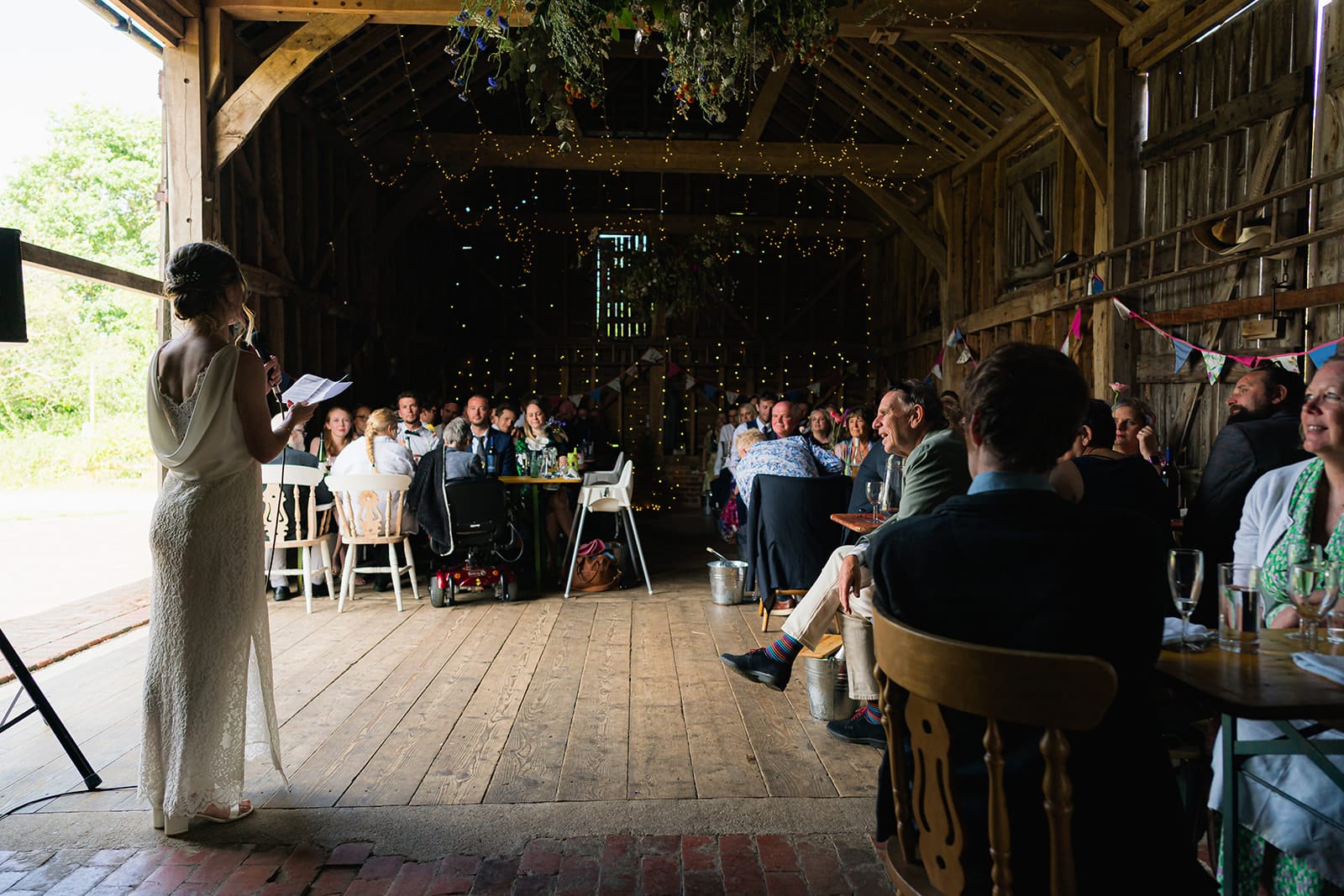
During speeches, for example, the person speaking is only part of the story.
The reactions around the room may be equally important. Someone might recognise where a story is heading and begin laughing before the punchline. A parent may become visibly emotional. Friends might exchange knowing looks.
Photographing these reactions can make the eventual gallery far more expressive than simply documenting whoever currently has the microphone.
The same principle applies throughout the wedding.
A photographer who watches the people around the main event can build several layers into a single sequence of photographs.
Why do small details matter?
Wedding storytelling is primarily about people, but details can provide valuable context.
Couples often spend considerable time making choices that reflect their personalities, families or the setting.
Flowers, table decorations, handwritten stationery, clothing and other elements can all contribute to the character of the day.
The key is photographing details as part of the wider story rather than treating them as entirely separate from it.
For example, a table setting may look beautiful before guests arrive. Later, photographs of that same table filled with conversation and laughter show how the space was actually experienced.
A bouquet may be photographed carefully in the morning, but a later photograph of it resting on a chair after the ceremony tells a different part of the story.
These small visual connections make a gallery feel cohesive.
How do couple portraits fit into documentary storytelling?
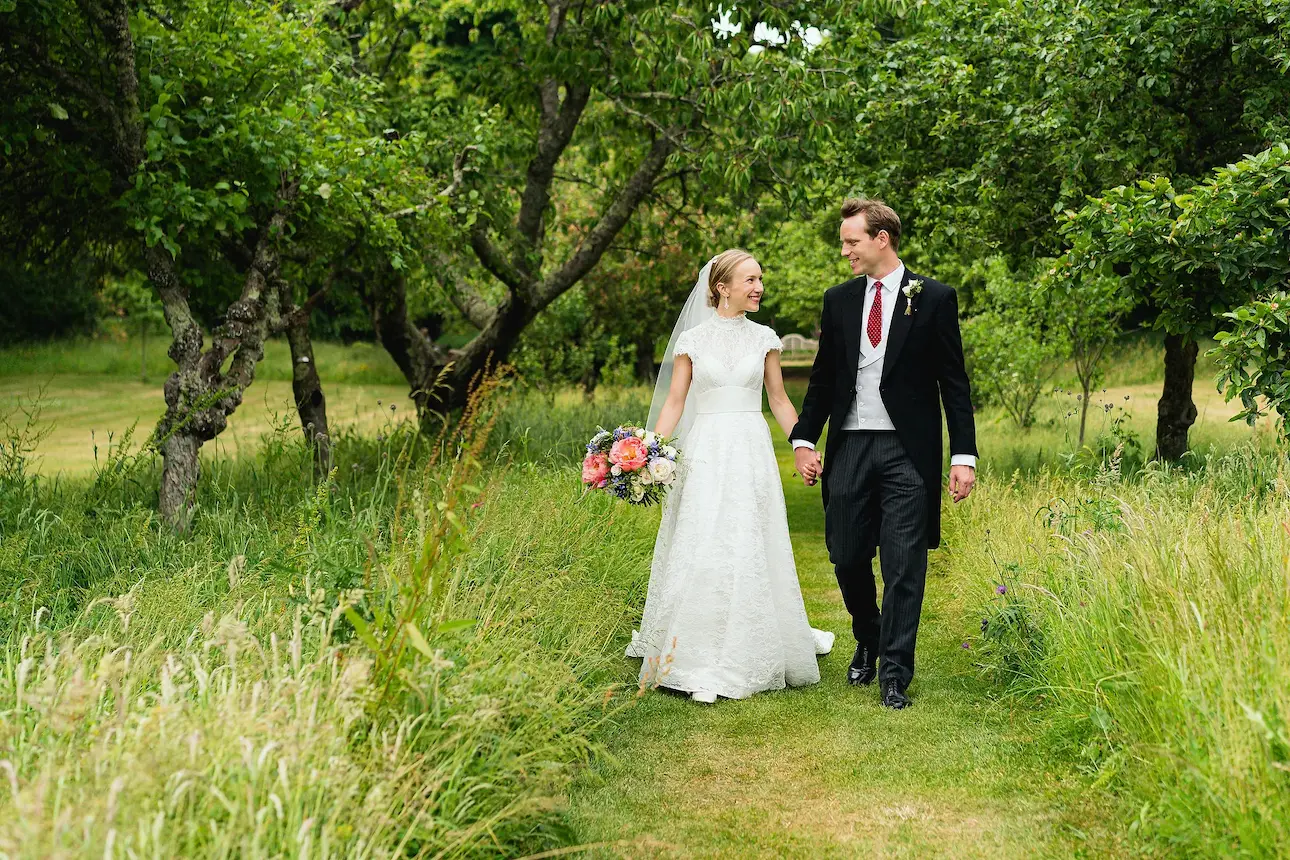
Natural wedding photography does not mean avoiding portraits altogether.
For many couples, photographs together are an important part of their gallery. The difference is that they do not necessarily need to dominate the day.
A portrait session can be relatively brief and relaxed.
Rather than leaving guests for a long photoshoot, the couple might take a short walk around the venue while the photographer offers minimal guidance and looks for natural interactions.
This approach serves two purposes.
First, it creates some photographs focused specifically on the couple. Secondly, it can provide a short pause in the middle of an otherwise very busy day.
The portraits then become another chapter in the story rather than feeling disconnected from everything happening around them.
If you prefer natural images to formal posing, it is worth discussing this with your photographer beforehand so that you share the same expectations.
What role does the venue play in the story?
A wedding venue provides more than a backdrop.
Its surroundings, architecture, light and atmosphere all influence the character of the photographs.
A rural wedding in Hampshire, for example, may involve open countryside, old barns, gardens or historic buildings. Another celebration might take place almost entirely indoors.
Strong wedding photography uses the location to establish a sense of place without allowing the venue to overwhelm the people.
Wide photographs can help show where events are happening, while smaller details give the setting texture.
Weather and seasonal changes also become part of this visual record.
The same venue can feel completely different on a bright June afternoon compared with a rainy autumn evening.
Rather than trying to make every wedding look identical, storytelling photography responds to the conditions that actually existed on the day.
How can changing light help tell the story?
A wedding day can move through very different lighting conditions.
Preparations might take place beside a bright window in the morning. The ceremony could be in a darker interior. Afternoon celebrations may happen outside before warm artificial lighting takes over in the evening.
These changes help create a visual sense of progression.
Experienced photographers learn to work with the available conditions rather than expecting everything to happen in perfect light.
This is particularly important for documentary photography because genuine moments cannot always be moved somewhere more convenient.
If a meaningful conversation is taking place in a dim corner of the reception room, asking everybody to repeat it beside a window would destroy the moment.
Being able to adapt while events continue naturally allows the photographer to preserve both authenticity and atmosphere.
Why are speeches such an important storytelling opportunity?
Speeches bring together many elements that make documentary photography compelling.
There are stories, jokes, surprises and emotional reactions, often happening rapidly across an entire room.
An effective photographic sequence might include the speaker, the couple’s reaction and several different guests responding to what is being said.
Sometimes the most memorable photograph is not of the person giving the speech at all.
It could be a parent trying not to cry or a table of friends collapsing into laughter.
These photographs help preserve not only that speeches happened, but what they felt like to experience.
How does evening photography complete the story?
The atmosphere often changes significantly once dinner and speeches are finished.
Guests relax. Formal clothing becomes slightly less formal. Shoes disappear. The dance floor fills and the carefully structured timeline of the daytime celebration becomes much looser.
Photographing at least part of the evening can therefore add a very different energy to the final gallery.
The first dance may be one obvious milestone, but what happens afterwards can be just as revealing.
Friends reunite on the dance floor. Children attempt increasingly ambitious moves. Different generations celebrate together. Quiet conversations take place away from the music.
These images provide a natural final chapter to the wedding story.
Without them, a gallery may stop just as the atmosphere of the celebration begins to change.
How can couples help their photographer capture the day naturally?
If you want photographs that genuinely reflect your wedding, one of the most useful things you can do is give yourself enough time to experience it.
Overly complicated schedules can create pressure for everybody involved.
Building a little flexibility into the day means that if preparations take longer than expected or guests spend an extra fifteen minutes enjoying the sunshine after the ceremony, it does not immediately create stress.
It also helps to tell your photographer about people or situations that carry particular significance.
Perhaps a grandparent has travelled a long distance to attend. Maybe several friends have not been together for years. There might be a handmade detail with an important family connection.
You do not necessarily need to provide instructions about exactly how these things should be photographed.
Simply sharing the context allows your photographer to recognise potentially meaningful moments when they occur.
You can also allow events to unfold naturally rather than continually checking whether the photographer has captured them.
A documentary photographer’s role is to watch for those moments so you can remain part of the wedding rather than managing the photography.
Does a wedding need to be perfect to create a great story?
Not at all.
Real wedding days contain unpredictability.
Rain arrives unexpectedly. Someone struggles with a buttonhole. A flower girl changes her mind about walking down the aisle. A speech goes off script. Timings slip.
These moments are not necessarily problems for the photography.
They are part of what makes one wedding different from another.
A perfectly controlled collection of photographs may look polished, but it can sometimes lose the personality of the actual day.
Storytelling photography leaves room for imperfections, humour and spontaneity.
Years later, the unexpected moments may be the ones that trigger the clearest memories.
Frequently Asked Questions
What is documentary wedding photography?
Documentary wedding photography focuses on capturing genuine events and interactions as they naturally happen. The photographer observes the day rather than constantly staging scenes or directing people.
Does storytelling wedding photography include posed photographs?
It can. A documentary approach does not prevent couples from having group photographs or portraits. These can be incorporated efficiently while allowing most of the wedding to unfold naturally.
How many photographs are needed to tell a wedding story?
There is no single ideal number. What matters more is that the finished gallery represents the different parts, people and atmosphere of the day rather than simply providing a large quantity of similar images.
Should wedding photographers capture guests as well as the couple?
Yes. Guest reactions and interactions can be an important part of a complete wedding story because they show the relationships and atmosphere surrounding the couple.
What moments are commonly missed by couples themselves?
Couples cannot be everywhere at once. They may miss guest reactions during the ceremony, conversations taking place elsewhere during the reception or spontaneous moments while they are speaking to other people. Photography can preserve some of these parallel stories.
Can rain become part of the wedding story?
Absolutely. Rain changes the atmosphere of a wedding but does not prevent meaningful photographs being created. It can become part of the authentic record of how the day actually unfolded.
A wedding story should feel like your wedding
The strongest wedding photographs are not necessarily the ones that could have been created at any celebration.
They are the photographs that remind you specifically of yours.
A complete wedding story includes the major milestones, but it also makes space for smaller moments, changing emotions, guests, details and the unexpected things that happened along the way.
That is why documentary photography can be so effective for couples who want a natural record of their day. Rather than forcing the wedding into a series of predetermined photographs, the photographer responds to the people and events that are actually there.
When you look back through the finished gallery, those photographs can do more than show what everything looked like. They can help you remember the atmosphere, rediscover moments you missed and see the day from perspectives you could not experience at the time.
You can explore more examples in the Lemontree Photography portfolio, learn about the wedding photography approach, or get in touch to discuss your wedding plans.
Phone: 07847 046360
Email: az@lemontree-photography.co.uk
Find out more: https://www.lemontree-photography.co.uk/