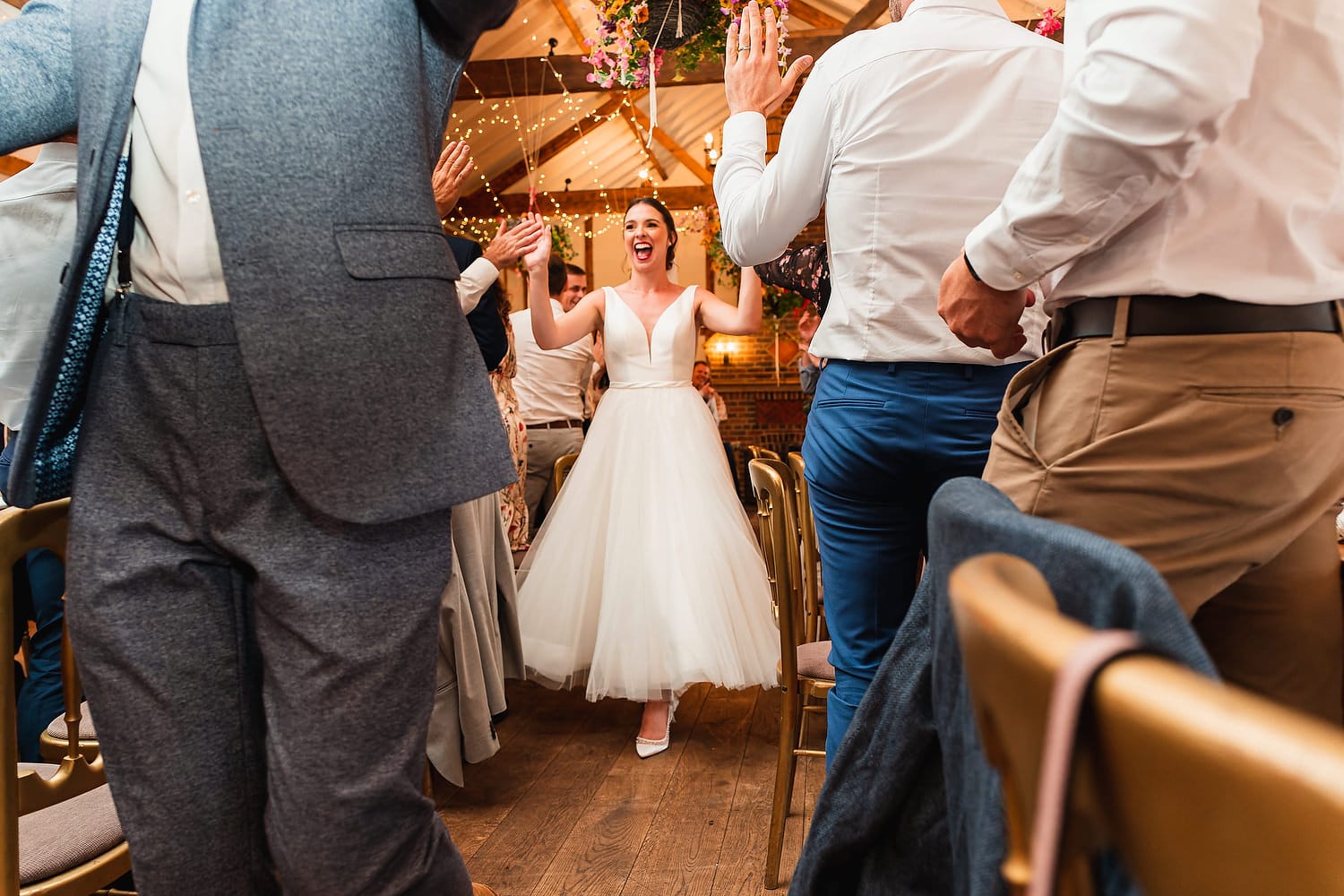
What Is Documentary Wedding Photography?
Documentary wedding photography is a natural, storytelling approach to wedding photography that focuses on real moments as they happen. Rather than directing every movement, arranging constant poses or turning the day into a photoshoot, a documentary wedding photographer quietly observes and captures the emotion, atmosphere and small details that make the wedding feel personal.
For many couples, this style feels more relaxed and honest. It allows the day to unfold naturally, with photographs that show genuine laughter, happy tears, nervous excitement, quiet glances and the energy of family and friends celebrating together.
It does not mean there is no care, skill or planning involved. In fact, good documentary wedding photography relies on timing, awareness, anticipation and experience. The aim is not simply to take random candid pictures, but to create a thoughtful visual story of the whole day.
What does documentary wedding photography mean?
Documentary wedding photography takes its inspiration from photojournalism. The photographer’s role is to document the event truthfully, capturing what happens rather than staging it.
At a wedding, this might include the anticipation during morning preparations, a parent seeing the dress for the first time, guests arriving at the ceremony, a partner’s reaction at the aisle, the emotion of the vows, the movement of confetti, conversations during drinks and the laughter during speeches.
The key difference is that the photographer is looking for real interaction. The images should feel like memories, not performances.
This style is often described using words such as:
- Natural
- Candid
- Relaxed
- Story-led
- Observational
- Unobtrusive
- Emotional
A documentary approach does not ignore composition, light or beauty. It simply uses those skills in a way that supports authenticity. A good photographer still considers framing, timing, background and mood, but without constantly interrupting the flow of the day.
How is documentary wedding photography different from traditional wedding photography?
Traditional wedding photography often places more emphasis on formal portraits, directed group shots and carefully arranged images. This can be valuable, especially for family photographs, but it may not suit every couple’s idea of how they want their day to feel.
Documentary wedding photography is usually less about creating perfect staged scenes and more about preserving the real experience of the wedding.
Traditional photography is often more directed
With a traditional approach, the photographer may take a more active role throughout the day. They might move people into position, adjust hands, direct expressions and spend more time setting up images.
This can work well for couples who want classic, polished portraits and a structured photography schedule.
Documentary photography is more observational
With a documentary approach, the photographer spends more time watching for meaningful moments. They are looking for connection, movement, humour, emotion and atmosphere.
This does not mean the photographer disappears completely. They still need to be present, attentive and ready. The difference is that they are usually working around the day rather than making the day work around the photographs.
Most weddings benefit from a balance
It is worth saying that documentary wedding photography does not have to exclude portraits or group photographs. Many couples still want a small number of family pictures and relaxed couple portraits.
The difference is in the overall priority. A documentary-led photographer will usually keep these sections simple, efficient and natural, so the couple can spend more time enjoying the wedding rather than feeling like they are away from their guests for too long.
For couples who want to see how this style looks in practice, viewing a photographer’s wedding portfolio is often more useful than reading descriptions alone.
What moments does a documentary wedding photographer capture?
A documentary wedding photographer is interested in the full story of the day, not just the obvious highlights. The ceremony and couple portraits matter, but so do the in-between moments that give the final gallery its character.
The build-up before the ceremony
The morning can be full of quiet, emotional and funny moments. A documentary photographer may capture the nerves before getting dressed, friends helping with final details, handwritten notes, family reactions and the natural chaos that often comes with getting ready.
These photographs can be especially meaningful because couples are usually separated during this part of the day. The final gallery allows both people to see parts of the morning they did not experience directly.
The ceremony as it really felt
During the ceremony, documentary photography focuses on emotion and reaction. This could include the expression of the person waiting at the front, guests smiling through tears, hands being held tightly, children behaving unpredictably or the moment immediately after the couple are married.
Rather than only capturing the formal exchange of vows, the photographer is also watching the people around the couple. Weddings are full of reactions, and those reactions often become some of the most treasured images.
The atmosphere after the ceremony
The time after the ceremony is often full of movement. Guests hug, congratulate, laugh, talk, drink, throw confetti and settle into the celebration. A documentary photographer will look for the energy of this part of the day.
This is where the gallery starts to feel alive. It is not just about who was there, but how it felt to be there.
Speeches, laughter and unexpected reactions
Speeches are ideal for documentary wedding photography because they create natural reactions. There may be laughter, embarrassment, emotion, surprise and shared memories.
A photographer working in this style will often capture both the speaker and the guests. The best image may not always be the person holding the microphone. It might be a parent reacting, a friend wiping away tears or the couple laughing together.
Evening celebrations
As the formal parts of the wedding give way to the evening, documentary photography can become even more expressive. Dancing, movement, low light, drinks, embraces and unguarded moments all help complete the story.
These images may feel less polished than formal portraits, but they often carry a huge amount of personality.
Is documentary wedding photography completely unposed?
Documentary wedding photography is mainly unposed, but that does not always mean every single image is completely untouched by direction.
Most couples still want a few relaxed portraits together and some family group photographs. The documentary approach simply handles those moments in a more natural and efficient way.
Relaxed portraits can still be part of the day
Couple portraits do not have to feel stiff or awkward. A documentary-led photographer might take the couple away for a short walk, use natural light and give gentle prompts rather than formal poses.
The aim is usually to create photographs that still feel like the couple, rather than turning them into something overly staged.
Family photographs can be kept simple
Group photographs are often important, especially for parents and grandparents. A good approach is to plan a short list in advance, keep the process organised and avoid letting it take over the drinks reception.
This keeps the day flowing while still making sure key family combinations are captured.
Guidance is different from staging
There is a difference between helpful guidance and heavy staging. A photographer may suggest where to stand for better light or how to make a group photograph quicker and easier. That does not stop the overall style from being documentary.
The important question is whether the photographer’s presence changes the feel of the day. In documentary wedding photography, the goal is to preserve the atmosphere, not control it.
Why do couples choose documentary wedding photography?
Couples often choose documentary wedding photography because they want to enjoy their wedding without feeling constantly directed. They may feel uncomfortable in front of the camera, prefer natural images or want the final gallery to reflect the real personality of the day.
It suits couples who dislike posing
Not everyone enjoys being photographed. Some people feel self-conscious when asked to smile on command or hold a pose for too long.
A documentary approach helps reduce that pressure. Rather than asking the couple to perform for the camera throughout the day, the photographer captures them interacting naturally with each other and their guests.
It captures the people, not just the styling
Wedding details matter. Flowers, outfits, table settings and venues all help shape the day. But years later, many couples find that the people and emotions matter most.
Documentary photography gives space to both. It records the look of the wedding, but it also captures the relationships and atmosphere behind it.
It tells a fuller story
A wedding is not one moment. It is a sequence of experiences, from the anticipation beforehand to the energy of the evening.
Documentary photography works well because it connects those moments together. The final gallery should feel like a story that can be revisited, not just a set of individual images.
How do you know if documentary wedding photography is right for your wedding?
Documentary wedding photography is a strong fit if you want your wedding to feel relaxed, natural and centred around real moments.
It may be right for you if:
- You want candid photographs rather than heavily posed images
- You care about emotion, atmosphere and storytelling
- You want to spend more time with guests and less time in formal photos
- You feel awkward in front of the camera
- You want images that reflect the day honestly
It may be less suitable if you want a highly editorial, fashion-led or heavily directed style. There is nothing wrong with those approaches, but they create a different experience.
The best way to decide is to look carefully through full wedding galleries, not just selected highlights. A full gallery shows how a photographer handles different parts of the day, changing light, real emotions, family groups, portraits and evening celebrations.
Couples can also read more about Lemontree Photography’s approach to wedding photography to understand how documentary coverage can fit into the full wedding day.
What should you ask a documentary wedding photographer?
Before booking, it helps to ask questions that reveal how the photographer works on a real wedding day.
Useful questions include:
- How do you approach candid moments during the day?
- Do you still take family group photographs?
- How much time do you usually need for couple portraits?
- Can we see a full wedding gallery?
- How do you work in low light during speeches and dancing?
- What happens if the weather changes?
- How do you make camera-shy couples feel comfortable?
The answers should help you understand whether their style, personality and process suit the kind of wedding experience you want.
A good documentary photographer should feel calm, observant and reassuring. They should be able to explain how they capture natural moments without making the day feel interrupted or overly managed.
Frequently Asked Questions
Is documentary wedding photography the same as candid photography?
They are closely related, but not exactly the same. Candid photography usually refers to unposed images, while documentary wedding photography is a broader storytelling approach. It uses candid moments to build a complete visual record of the wedding day.
Will we still get couple portraits?
Yes, most documentary wedding photographers still include couple portraits if you want them. The difference is that they are usually relaxed, natural and kept to a sensible amount of time, rather than becoming the main focus of the day.
Can we have family group photos with a documentary style?
Yes. Family group photographs can still be included. It is best to prepare a short list before the wedding so this part of the day runs smoothly and does not take too much time away from the celebration.
Is documentary wedding photography suitable for large weddings?
Yes. It can work very well for larger weddings because there are often more interactions, reactions and moments to capture. The photographer’s ability to move discreetly and anticipate moments becomes especially important.
Does documentary wedding photography work in bad weather?
Yes. Rain, wind or changing weather can still create beautiful and meaningful photographs. A documentary approach focuses on the real story of the day, including how people respond, adapt and enjoy themselves whatever the weather does.
Final thoughts
Documentary wedding photography is about capturing a wedding as it truly happens. It is natural, relaxed and centred on real emotion rather than constant posing or staged perfection.
For couples who want to remember not only how their wedding looked, but how it felt, this style can be a wonderful fit. It gives space for genuine moments, personal connections and all the small details that might otherwise be missed.
The best documentary wedding photographs often feel effortless, but they come from careful observation, experience and trust. When you choose the right photographer, you can focus on enjoying the day, knowing the story is being quietly and thoughtfully preserved.
For natural, documentary-style wedding photography across Hampshire and the South of England, explore Lemontree Photography’s about page or get in touch through the contact page.
Phone: 07847 046360
Email: az@lemontree-photography.co.uk
Find out more: https://www.lemontree-photography.co.uk/
See my work on Instagram