Feeling nervous about wedding photographs is incredibly common.
Many couples love the idea of having a beautiful record of their wedding day but feel much less enthusiastic about the thought of posing for a camera. You may worry about looking awkward, not knowing what to do with your hands, feeling self-conscious or spending too much of the day being directed into unnatural positions.
The good news is that you do not need to be naturally confident in front of the camera to have photographs you genuinely love.
In fact, some of the most natural wedding photographs happen when couples are not thinking about the camera at all.
Choosing the right photographer, understanding how they work and taking the pressure off yourself can make a huge difference. Rather than trying to perform for the camera, you can focus on the people around you and the experience of the day itself.
For couples who prefer natural, documentary-style wedding photography, that relaxed approach can be particularly effective.
Why do so many couples feel awkward in front of the camera?
Most people are not used to being professionally photographed.
Outside of occasional family pictures, holidays or photographs with friends, you probably do not spend much time thinking about how you look from different angles or what expression you should be making.
A wedding suddenly puts much more attention on photography.
That can create pressure.
You may start wondering:
- Where should I look?
- What should I do with my hands?
- Am I standing naturally?
- Do I look uncomfortable?
- Should I be smiling?
- Is the photographer waiting for me to do something?
Once you begin analysing every movement, it becomes much harder to behave naturally.
This is why a good wedding photographer should not expect you to arrive knowing how to pose.
Their job is to create an environment where you can relax rather than turning the photography into another thing you need to manage.
How can choosing the right photographer help you feel more comfortable?
Your relationship with your photographer matters.
You may spend a significant amount of your wedding day around them, including some of the most personal and emotional moments.
If their personality or working style makes you uncomfortable, it will be much harder to ignore the camera.
Before booking, have a conversation with the photographer and ask how they normally work with couples who do not enjoy being photographed.
A photographer with a relaxed approach should understand that not everybody wants elaborate posing or constant direction.
They may explain that much of the day is photographed without asking you to do anything at all.
That can be reassuring.
You are not being photographed for a fashion campaign. You are getting married, spending time with people you care about and celebrating.
The photography should fit around that.
Looking through a photographer’s portfolio can also help.
Pay attention to how people look in the images. Do they appear comfortable and engaged with each other, or very aware of the camera?
That can tell you a great deal about the photographer’s approach.
Do you need to know how to pose for wedding photographs?
No.
You do not need to practise poses, research where to put your hands or memorise a list of flattering positions.
A good photographer should be able to provide guidance when it is genuinely useful.
For example, during a short portrait session they might suggest that you stand in a particular place because the light is better or encourage you to walk together rather than remain completely still.
That is very different from expecting you to perform a long sequence of formal poses.
Many couples find movement easier than standing still.
Walking, talking or simply spending a few minutes together often produces more natural expressions because your attention is on each other rather than on the camera.
The aim is not to become good at posing.
It is to create situations in which you can behave normally.
How does documentary wedding photography reduce the pressure?
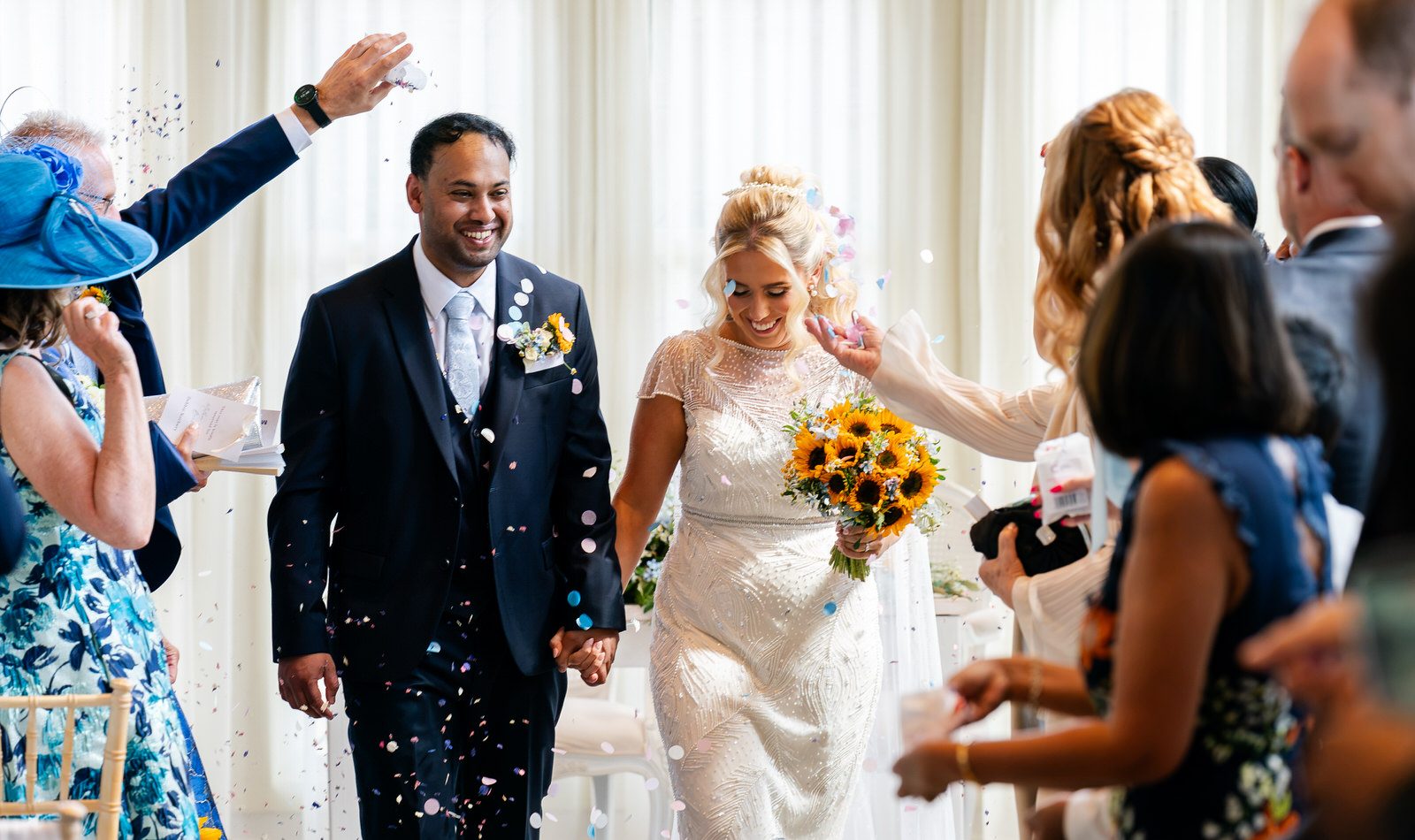
A documentary approach focuses on photographing genuine moments as they happen.
That means much of the wedding does not require you to look at the camera at all.
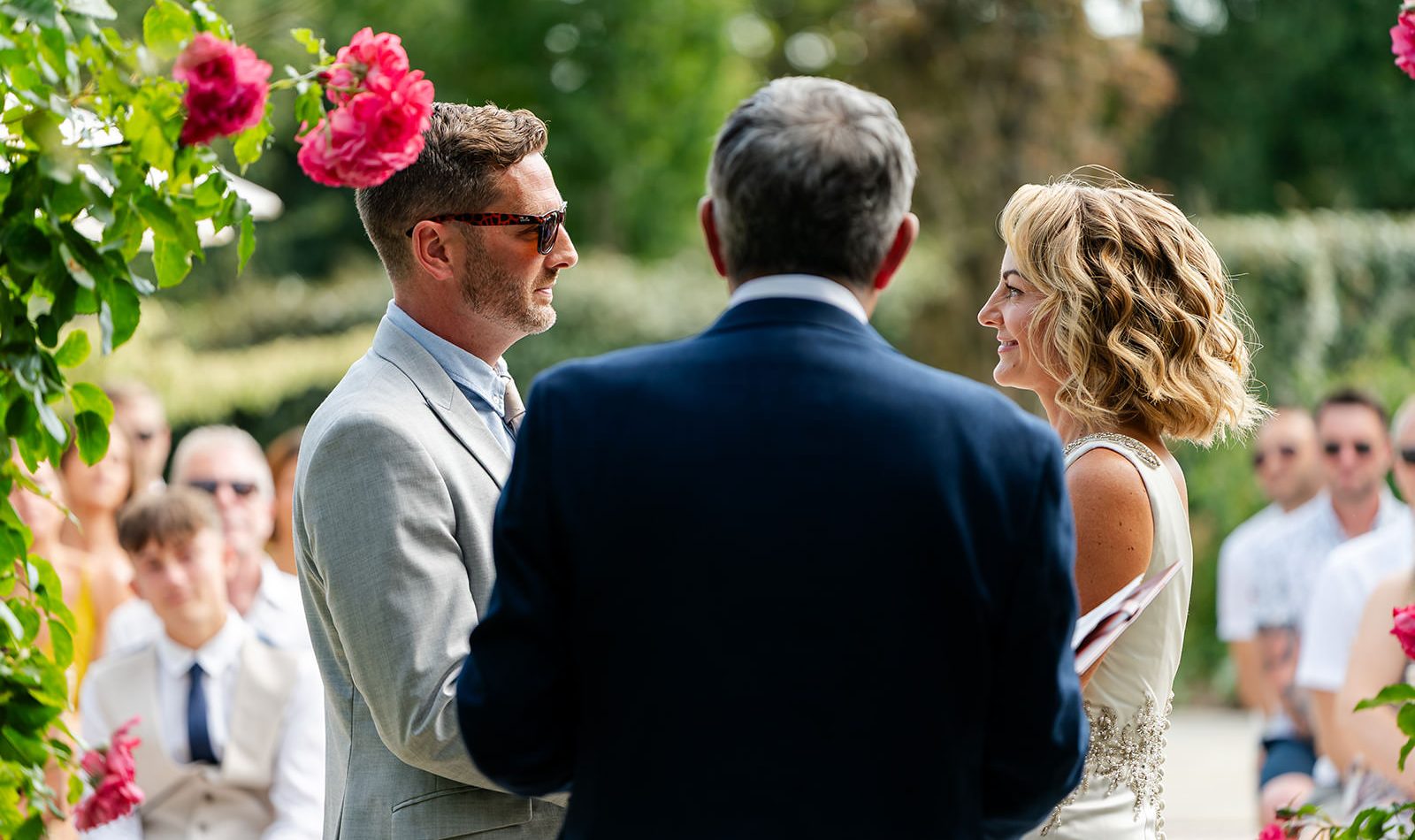
During the ceremony, you are focused on your partner.
At the drinks reception, you are talking to guests.
During speeches, you are listening and reacting.
On the dance floor, you are celebrating.
These moments naturally produce photographs without requiring you to pose.
A photographer working in this way pays attention to expressions, gestures, interactions and reactions rather than repeatedly interrupting the day.
For couples who feel self-conscious, that can make documentary wedding photography feel much less intimidating.
You do not need to think constantly about being photographed.
Instead, you can be present in the wedding itself.
Should you tell your photographer that you feel nervous?
Yes.
If you dislike having your photograph taken, tell your photographer before the wedding.
There is no need to pretend you are completely comfortable.
Knowing how you feel allows the photographer to adapt their approach.
They may keep portrait sessions shorter, use less direction or explain in advance what will happen so there are no surprises.
You can also talk about specific concerns.
Perhaps you particularly dislike close-up portraits. Maybe one of you is much more comfortable in front of a camera than the other. You may have had a previous photography experience that felt overly staged or uncomfortable.
Sharing these concerns can help the photographer understand what you want to avoid.
The conversation itself may also make you feel more relaxed because you know you will not be pushed into a style of photography that does not suit you.
Can an engagement shoot help?
For some couples, an engagement shoot can make the wedding photography feel more familiar.
It gives you an opportunity to experience being photographed together before the wedding day.
You can see how your photographer gives direction and discover that you do not actually need to do very much.
This can be particularly useful if your anxiety comes from not knowing what to expect.
However, an engagement shoot is not essential for everybody.
You should not feel that you need a rehearsal simply to become capable of having wedding photographs taken.
If you choose a relaxed photographer and discuss your concerns beforehand, you can still feel comfortable without any previous professional photography experience.
What can you do before the wedding to feel more confident?
There are a few simple things that can help.
Stop comparing yourself with other couples
Wedding photography can look extremely polished online.
Remember that you are usually seeing carefully selected images from many different weddings.
You do not need to recreate somebody else’s photograph.
Your expressions, relationship and body language will naturally look different because you are different people.
Trying to copy a specific pose or image can sometimes create more pressure than simply allowing your photographer to respond to you naturally.
Wear something you feel comfortable in
Your wedding clothes should make you feel like yourself.
If you are continually adjusting an outfit or worrying about whether something is sitting correctly, that discomfort can affect how relaxed you feel.
Comfort does not mean compromising the style you want.
It simply means choosing clothing that you can move, sit, walk and celebrate in without constantly thinking about it.
Build breathing room into the schedule
Rushed wedding days create tension.
If every part of the day is scheduled with no margin for delays, even a small change can make you feel stressed.
Leaving a little flexibility can help you feel calmer overall, which naturally carries into the photographs.
Do not over-prepare your expressions
You do not need to practise smiling in a mirror.
Natural expressions are usually much more engaging than a fixed camera smile.
If something makes you laugh, laugh.
If a moment feels emotional, allow that expression to happen too.
Wedding photographs do not all need to show exactly the same polished expression.
How can you make couple portraits feel less awkward?
Couple portraits are often the part of wedding photography people worry about most.
The key is not treating them as a performance.
A relaxed portrait session might involve leaving the reception for a short walk around the venue.
Your photographer may identify a location with good light and then let you interact naturally.
Rather than thinking about what your face is doing, talk to each other.
You could discuss something that happened earlier in the day, comment on what your guests are doing or simply enjoy a few quiet minutes together.
This often creates much more natural expressions than being told to stare romantically at each other on demand.
Movement can help too.
Walking hand in hand or changing position naturally gives you something to do, which removes some of the awkwardness of standing still.
How long should wedding portraits take?
They do not necessarily need to take very long.
For couples who want a largely documentary record, portraits can be kept relatively brief.
A short session of around ten or fifteen minutes can sometimes provide plenty of opportunities without taking you away from guests for a significant portion of the reception.
Depending on the venue and light, your photographer may also suggest another short session later in the day.
For example, the evening light may provide an opportunity for a few additional photographs.
Breaking portraits into shorter periods can feel much more relaxed than having one long formal session.
The exact approach will depend on your photographer, venue and schedule.
Should you look at the camera?
Not all the time.
Some photographs may involve looking directly at the camera, particularly family group pictures.
However, natural wedding photography often relies on interaction rather than direct eye contact with the lens.
You might look at your partner, walk together or simply continue whatever you were doing.
This tends to produce photographs that feel more like genuine moments rather than formal portraits.
Your photographer can tell you when they need you to look towards the camera.
The rest of the time, you generally do not need to think about it.
What about family and group photographs?
Formal photographs can still feel relaxed if they are organised efficiently.
The biggest source of stress is often not the posing itself but the amount of time spent gathering people.
You can make the process easier by deciding in advance which groups genuinely matter.
A concise list might include parents, siblings, grandparents and the wedding party rather than every possible combination of relatives and friends.
It can also help to nominate somebody who knows the family and can gather people quickly.
Once everyone is present, the photographer can usually arrange each group without requiring you to know exactly where to stand.
Keeping this part of the day organised means you can move back to the more spontaneous parts of the celebration quickly.
What if one person is more camera-shy than the other?
This is very common.
One of you may enjoy being photographed while the other feels uncomfortable as soon as a camera appears.
The answer is not to force the more nervous person to match the other’s confidence.
Instead, let the photographer know.
A relaxed approach can give the more camera-shy partner time to settle into the process.
It may help to begin with movement rather than close portraits or to keep conversation going so the focus stays on the relationship rather than the photography.
Confidence often increases once people realise the photographer is not expecting them to perform.
After a few minutes, many couples become much less conscious of the camera.
Can alcohol help you relax for photographs?
It may be tempting to think a few drinks will remove nerves, but relying on alcohol to feel comfortable is not particularly helpful.
A wedding photographer should be able to make the experience feel manageable without you needing to change how you feel artificially.
You also want photographs that genuinely represent the day rather than looking back and realising you were more affected by alcohol than you intended.
If you choose to have a drink during the celebrations, that is of course part of the wedding.
It just should not feel like a requirement for getting through the photography.
Why does focusing on your partner help?
When people become nervous in front of a camera, they tend to focus inward.
They think about their expression, body, hands and how they might look in the final image.
Shifting your attention towards your partner can break that cycle.
Talk to them.
Look at them.
Laugh about something that happened earlier.
Notice what is going on around you.
The less attention you give the camera, the less intimidating it becomes.
This is one of the reasons wedding photography can feel easier than a traditional studio portrait.
You already have somebody with you who makes you feel comfortable.
How can guests affect how relaxed you feel?
Sometimes the most awkward part of wedding portraits is not the photographer.
It is having a group of friends watching from a nearby window and shouting suggestions.
If you think this might make you self-conscious, taking a short walk away from the main reception can help.
You do not need to go far.
Simply finding a quieter part of the venue can give you a little privacy.
This also provides a useful pause in the day.
Weddings can be extremely social, so ten minutes away from the crowd can feel surprisingly welcome.
Should you avoid photographs if you are very camera-shy?
Probably not.
If photography is important to you, avoiding it completely because you feel uncomfortable may be something you regret later.
The better solution is to choose an approach that suits your personality.
You do not need hours of posed portraits.
You do not need to spend the whole day looking at the camera.
You do not need to transform into somebody naturally confident in front of a lens.
A documentary approach can preserve a huge amount of your wedding while asking very little of you.
Your job is to experience the day.
The photographer’s job is to notice it.
Frequently Asked Questions
Is it normal to feel awkward during wedding photos?
Yes. Many people are not used to being professionally photographed and feel self-conscious at first. A relaxed photographer should help you become comfortable without expecting you to know how to pose.
What should I do with my hands in wedding photographs?
You generally do not need to worry about it. If any adjustment is needed, your photographer can guide you. Natural interaction and movement usually prevent hands from feeling awkward anyway.
How can I stop worrying about how I look in wedding photos?
Try to focus on your partner, guests and the experience of the day rather than monitoring your appearance. Choosing a photographer whose style you trust can also make it easier to let go of that concern.
Are candid wedding photographs better for camera-shy couples?
They can be particularly suitable because candid photography does not require you to continually pose or look towards the camera. Most images are created while you are naturally interacting with other people.
Do wedding photographers tell you how to pose?
This depends on the photographer’s style. A documentary photographer may provide occasional guidance while allowing most of the day to unfold naturally rather than relying on formal posing.
Will our wedding photographs look awkward if we are nervous?
Not necessarily. Experienced photographers regularly work with people who initially feel uncomfortable in front of the camera and know how to create relaxed situations that encourage natural expressions.
You do not need to perform for your wedding photographs
Feeling nervous in front of a camera does not mean you are going to dislike your wedding photographs.
It simply means the photography needs to work with your personality rather than against it.
Choose a photographer whose approach makes sense to you. Explain any concerns before the wedding. Keep formal photography manageable and give yourself permission to stop thinking about the camera.
Most importantly, focus on the wedding itself.
Talk to your friends. Hug your family. Listen to the speeches. Laugh when things go wrong. Spend time with your partner.
Those are the moments a documentary photographer is looking for.
When the emphasis is on experiencing the day rather than performing for photographs, the final images are much more likely to feel recognisable and personal.
You can learn more about Lemontree Photography’s wedding photography, browse the portfolio, or get in touch to discuss your plans.
Phone: 07847 046360
Email: az@lemontree-photography.co.uk
Find out more: https://www.lemontree-photography.co.uk/